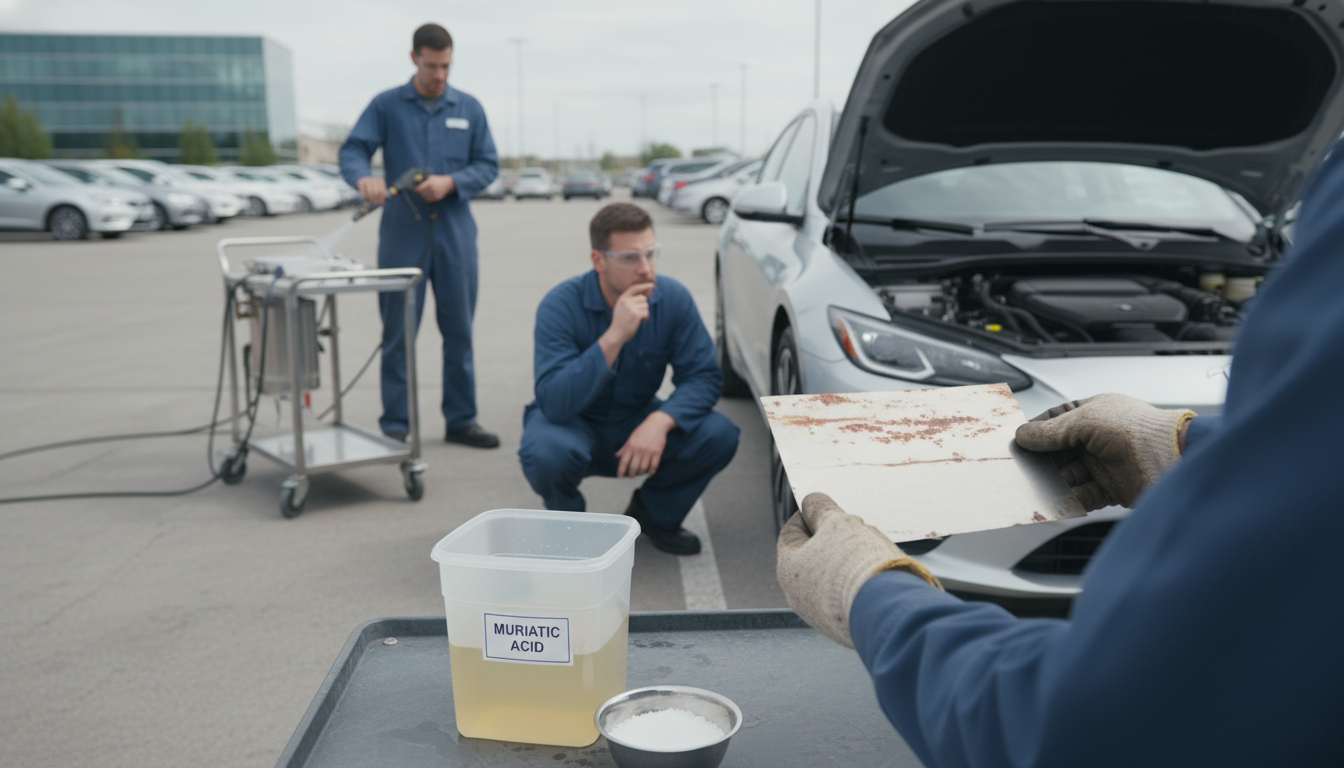
Stainless steel is a great all-around material, but there are situations where it’s not the best choice. Avoid using stainless steel when it will be exposed to prolonged chloride contact, harsh chemicals, or extreme heat cycles that can damage its protective surface layer and lead to staining or corrosion over time.
Chlorides are one of the fastest ways to trigger pitting and crevice corrosion on stainless steel. That includes coastal air, saltwater splash zones, and frequent contact with chlorine-based products (like bleach). If stainless steel will regularly sit wet with salty residue—such as near pools, in marine settings, or on fixtures cleaned with bleach—choose a more suitable material or a higher-grade stainless (and maintain it carefully).
Many stainless steels tolerate mild acids, but repeated exposure to strong acids, industrial descalers, and high-alkaline chemicals can etch or discolor the surface. If the area requires frequent use of aggressive cleaners (or chemical fumes), stainless steel may lose its finish and become harder to keep looking clean.
Stainless steel performs well in normal hot-water use, but extreme temperatures or rapid heat cycling can cause warping, discoloration (“heat tint”), or accelerated scale buildup in some components. For parts that routinely face very high temperatures, specialized heat-resistant alloys are often the safer choice.
Stainless steel can scratch, and scratches make smudges and mineral spots more noticeable. If the surface will be scraped by abrasive pads, metal tools, or gritty debris, it may look worn quickly. In those cases, a more scratch-tolerant finish or material may hold up better cosmetically.
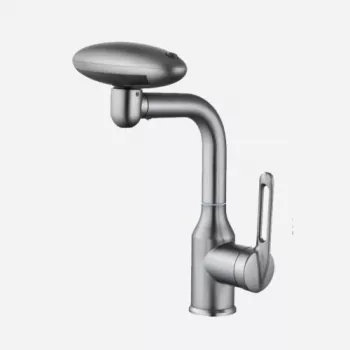
For a practical look at stainless steel in bathroom fixtures—what to look for, how finishes differ, and how to shop smart—see the 360 swivel stainless steel bathroom faucet buying guide.
Avoid steel wool, abrasive scouring powders, and chlorine bleach, since they can scratch the surface or cause pitting. Also skip cleaners that contain chlorides and don’t let salty or bleach solutions sit on the metal.
Tamarind is acidic, but stainless steel is generally fine for brief contact during cooking. Long soaking or storing tamarind mixtures in stainless steel for extended periods can increase the chance of dulling or slight discoloration, especially on lower-grade steel.
Oxalic acid is commonly used in some stainless steel cleaners to remove rust stains and mineral marks. Use it in a diluted, product-directed way, rinse thoroughly, and don’t leave it on the surface longer than recommended.










Leave a comment