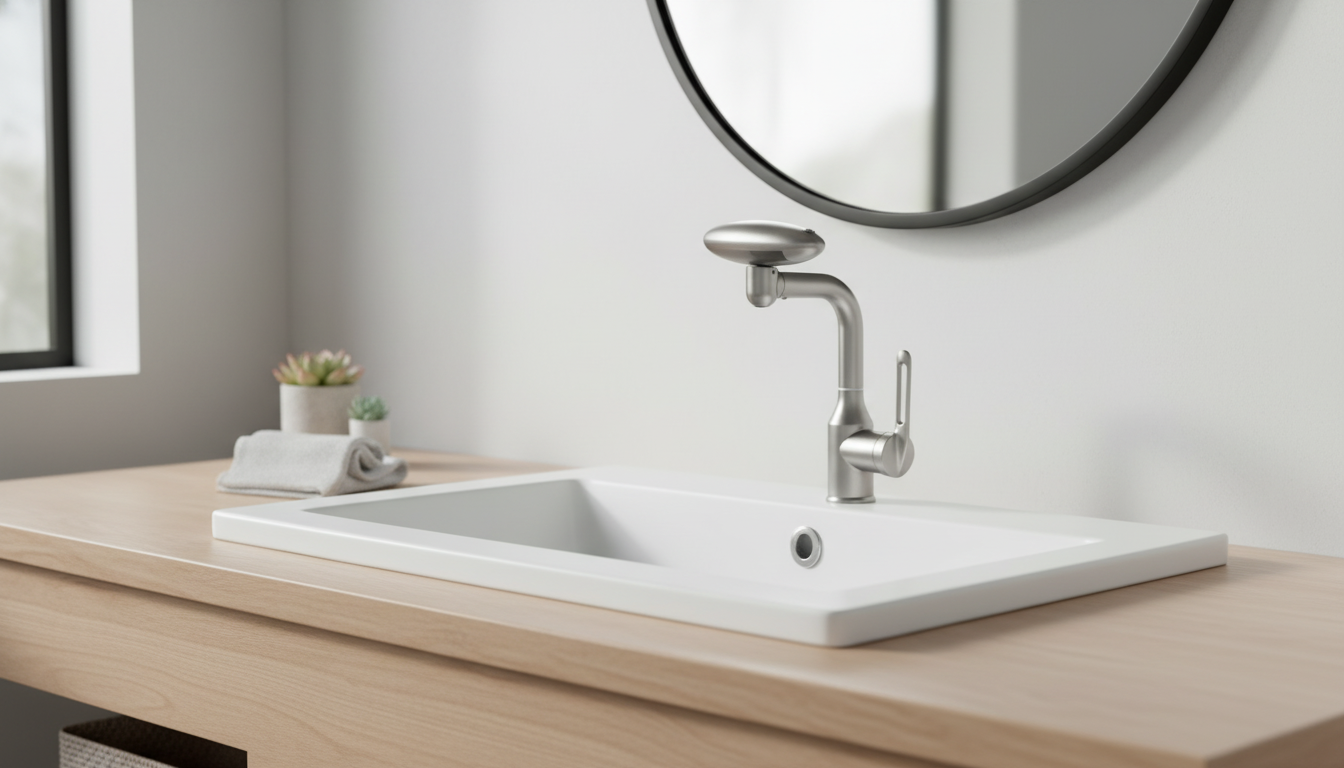
A swivel bathroom faucet adds everyday flexibility—rinsing the basin, filling containers, and keeping countertops cleaner with less splashing. Stainless steel brings a modern look plus strong resistance to corrosion and wear in humid bathroom conditions. Below is a practical breakdown of what a 360° swivel stainless steel faucet offers, what to check before installing, and how to keep it looking new.
A full-rotation spout is a small upgrade that can make a shared or frequently used sink feel easier to live with. Instead of working around a fixed stream position, you can place the water exactly where it’s most useful.
In practice, the biggest day-to-day benefit is control: you can aim the stream toward the drain when you want a calmer rinse, then swing it outward for filling a container without banging it into the bowl.
Bathrooms combine moisture, frequent hand contact, and routine cleaning—conditions that can quickly expose weak finishes. Stainless steel is popular because it stays presentable while holding up to daily use.
If water efficiency is a priority, it’s also worth checking whether the faucet meets the flow rate commonly used for bathroom sinks. The EPA’s WaterSense bathroom faucet guidance is a helpful reference point when comparing flow and performance expectations.
Most installation headaches come from mismatched dimensions or missing plumbing details. A few measurements up front can prevent returns and last-minute hardware store runs.
| Item to verify | What to measure/check | Why it matters |
|---|---|---|
| Mount type | Single-hole or multi-hole deck | Ensures the faucet fits without adapters |
| Spout reach | Distance from faucet center to water outlet | Helps place stream near the drain to reduce splashing |
| Spout height | Height from deck to aerator | Prevents knuckle bumps and improves clearance |
| Supply lines | Connector size and hose length | Avoids last-minute plumbing parts runs |
| Aerator access | Removable tip and thread type | Makes descaling and debris removal easier |
Busy bathrooms amplify small annoyances: a stream that hits the wrong spot, a handle that bumps the backsplash, or a spout that can’t rotate without hitting the mirror. A few placement checks can make the finished setup feel intentional.
For homes with hard water, leaving a little extra room to access and remove the aerator can also pay off later—especially if mineral buildup is common.
Stainless steel is durable, but it still benefits from gentle care. The goal is to keep mineral deposits from building up and to avoid cleaners that can dull the surface over time.
When evaluating any faucet used for household water, many buyers also look for material and component standards. NSF’s overview of NSF/ANSI 61 explains how certain drinking-water system components can be assessed for health effects.
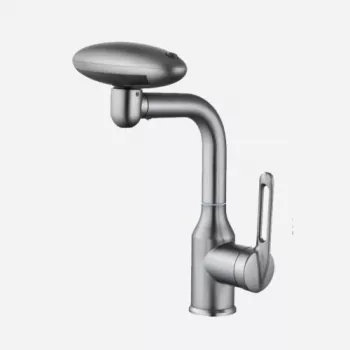
If the goal is an easy-to-aim stream and a clean, modern finish, the 360° Swivel Stainless Steel Faucet for Bathroom Sink is built around everyday flexibility.
Compare related options such as Car Dog Ramp “Tailgate” by Owleys to match features, dimensions, and use case before choosing.
Avoid or take extra care in settings with frequent bleach/chloride exposure or harsh chemicals that can cause pitting or discoloration on some stainless steels. If those cleaners are part of the routine, switch to gentler products, rinse and dry regularly, or choose a finish/material better suited to that environment.











Leave a comment