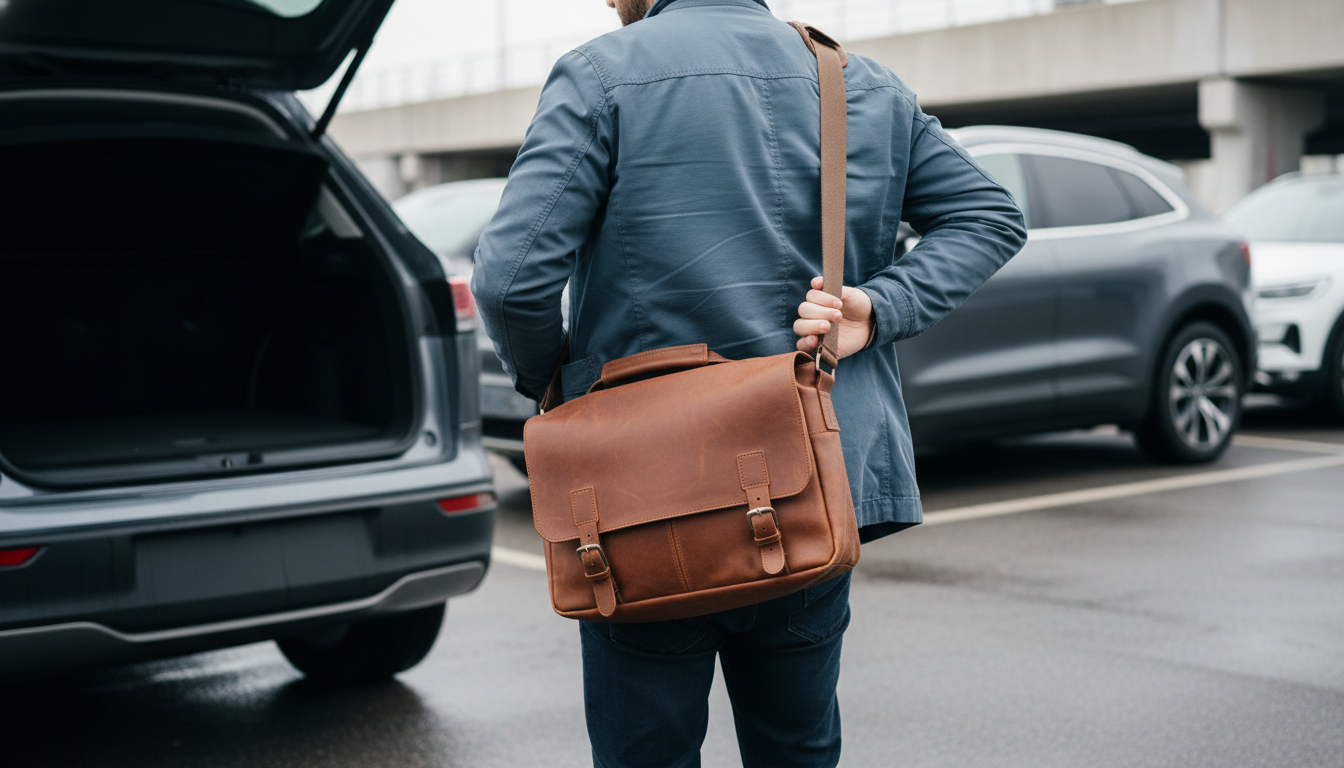
A messenger bag feels best when the strap is adjusted to match your body and the bag’s weight is kept close to your center. Start by placing the strap over your head so it runs diagonally across your chest (crossbody), with the bag resting against your hip rather than hanging low on your thigh. This position reduces swing and keeps the load stable as you walk.
Next, fine-tune strap length. A good baseline is when the top of the bag sits near your waistline and the bottom lands around your upper hip. If it’s too low, it will bounce and pull your shoulder forward; too high can dig into your underarm and feel cramped. Tighten until the bag stays close without restricting your movement.
For shoulder comfort, rotate the strap so it lies flat—no twists. If your messenger bag has a padded shoulder section, slide that pad to the spot where the strap meets the top of your shoulder bone (not your neck). If there’s no pad, wearing the strap slightly closer to the collarbone can reduce slipping, while keeping it off the side of your neck prevents rubbing.
Load distribution matters as much as strap adjustment. Pack heavier items (laptop, water bottle, charger) toward the back panel—the side that sits against your body—so the bag doesn’t pull outward. Use interior pockets to stop items from shifting, and avoid overstuffing; a bag that’s bulging forces the strap to bite and makes the weight feel heavier than it is.
Finally, swap sides occasionally. Even with a great fit, carrying on one shoulder all day can create tension. If your route allows, alternate which shoulder takes the load or briefly carry by the top handle to give your shoulder a break. For more tips on balancing style and all-day wear, see this guide to vintage messenger bags and everyday comfort.
It should be snug enough that the bag doesn’t swing when you walk, but loose enough that you can move your arms freely and the strap doesn’t press into your neck or underarm.











Leave a comment